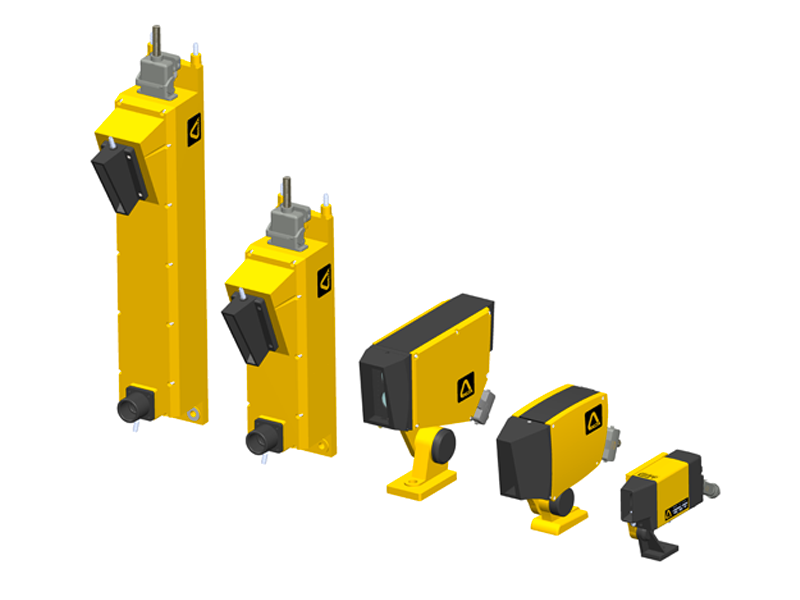
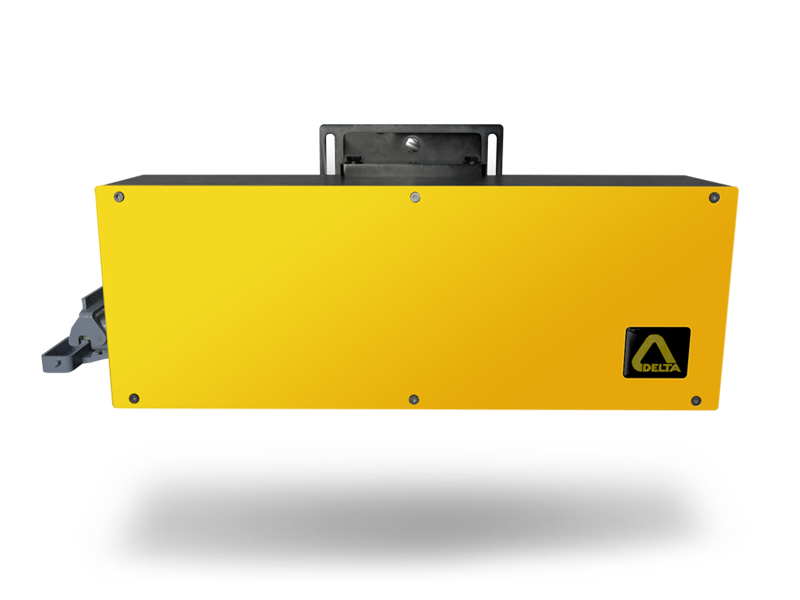
Scanning Weld hole Detection
- Large field of detection
- Fast detection
- No interference from ambient light
Weld Hole Detector DTS130
Typical applications
The DTS is an infrared scanning detector. In association with the EMI infrared emitter, it is able to detect the weld hole made in order to locate the linking weld between two strips.
The DTS sensor is sensitive to infrared emission and therefore is not disturbed by the reflection of sodium vapour or fluorescent lights on the strip.
General Description
The DTS is a scanning detector. The field of detection is scanned by a multiple mirrors system. When it encounters infrared radiation, the active element of the sensor produces a signal that is processed by the built-in electronic unit and delivers a logic output. The output is kept for 500 ms after the end of the detection.
Features
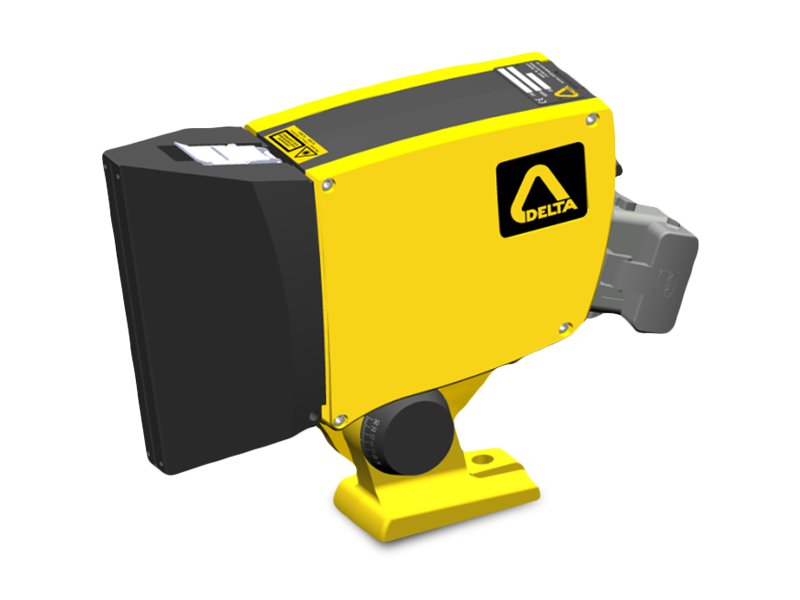
The DTS weld hole detector, has been designed for heavy industry with :
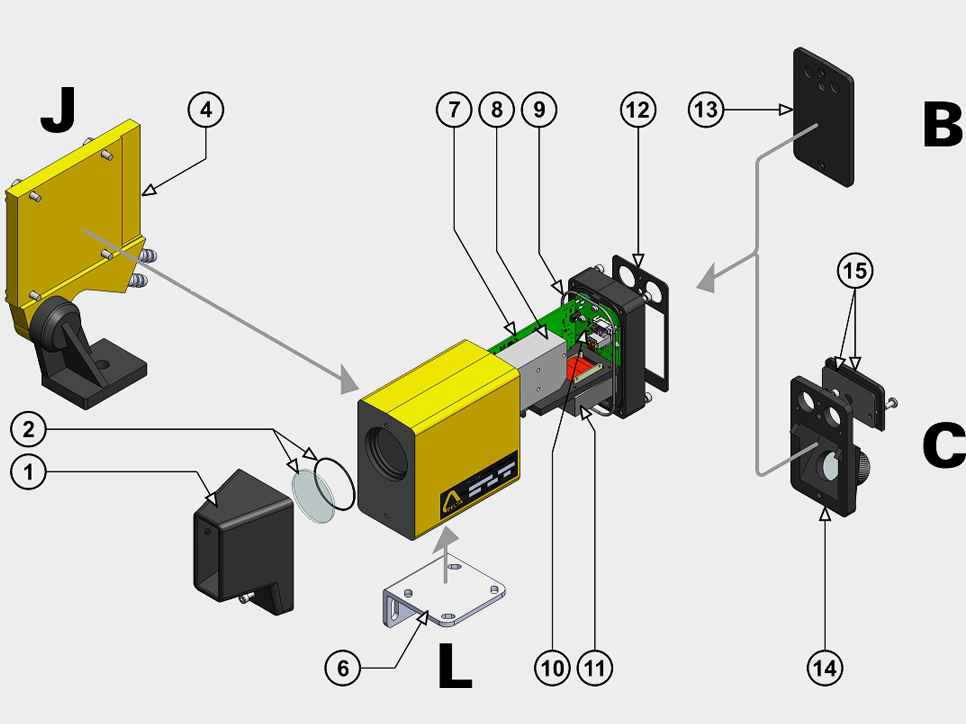
- Adjustable mounting stand (2 axis). In case the sensor needs to be replaced, it can be easily dismounted from the stand, without disturbing the alignment.
- Protective hood
- Direct sighting through the sensor enabling precise orientation
-
Control panel beneath a hinged cover at rear, including viewfinder, test button and indicator light.
Installation

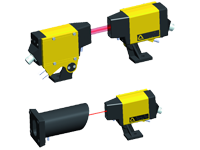
The DTS sensor detects the infrared emission emitted by an EMI through the weld hole. Sensor and emitter are fixed perpendicular to the line axis in order to take the lateral deviation of the strip into account.
The following conditions have to be held for a proper detection :
- The DTS field of view should completely cover the lateral position of the hole.
- The emission of the EMI infrared emitter should completely cover the lateral position of the hole.
- When there is no hole, the EMI emitter should be completely covered by the strip regardless of the lateral deviation of the strip. For applications where the emitter is not covered completely by strip, DELTA has developed the DTR.
- The time during which the DTS sensor can see the infrared emission should be more than 1 ms.
Typical installation